





Updated
Card Value Calculator: Is This Credit Card Worth the Annual Fee?
The fee is easy to see. The value isn't.
A $795 or $895 annual fee looks absurd until you read the list of credits: hotel credits, dining credits, streaming credits, rideshare credits. Card issuers love to add them up into a headline number that's always bigger than the fee.
But that headline assumes you use every credit, every month, at full value. Most people don't. The real question is simpler: of the benefits you'd actually use, are they worth more than the fee?
The Card Value Calculator answers that for nearly 200 US cards. Pick a card, untick the benefits you won't use, adjust the rest to what they're worth to you, and get a plain verdict for Year 1 and for every year after. It's free and doesn't require an account.
How to use the Card Value Calculator
-
Find your card. Search by name (like Venture X or Amex Platinum) or tap one of the popular cards. More than 60 cards come with their recurring credits preloaded. You can also jump here from any card in the Credit Card Browser or a card's own page with Calculate its value.
-
Read the verdict at the top. You'll see your value after the annual fee for Year 1 (with the welcome bonus) and for Year 2 and after, each labeled Worth it, Marginal or Not worth it, with the sum behind it underneath. On a phone, the two numbers follow you in a bar at the bottom of the screen as you scroll.
-
Go through the Credits. Every credit shows how often it resets (monthly, quarterly, twice a year, yearly) and what it adds up to in a year. Untick anything you won't use, and lower the dollar amount for credits you'll only partly use. Use all and Clear tick or untick every credit at once.
-
Value the perks, if they matter to you. Elite status, anniversary points and similar perks are listed under Perks with no set value at $0. Enter what one is worth to you in a year to count it.
-
Check Your numbers. The Point value is AwardHack's value for the card's points in cents. Change it to use your own. The Welcome bonus is the current public offer: enter the one you're seeing, set it to 0 if you've already had it, or switch it to $ if the offer is in dollars. Add a Retention offer if the issuer offers you points to keep the card.
-
Share it. Share copies a link (or opens your phone's share sheet) that opens the same card with your numbers: the credits you unticked, the amounts you changed and your bonus and point value.
Tip: Only count a credit at full value if you'd have spent that money anyway. A $15 monthly rideshare credit you use for rides you'd take regardless is worth $180. One that nudges you into rides you wouldn't have taken is worth much less.
How the verdict works
The calculator adds up what you've told it and compares it to the fee:
Year 1 value = usable benefits + signup bonus value
Year 2 value = usable benefits + retention offer value
Signup bonus value = bonus points × CPP ÷ 100
Then it labels each year:
| Verdict | When |
|---|---|
| Worth it | Value is greater than the annual fee (or there's no fee) |
| Marginal | Value is between 80% and 100% of the fee |
| Not worth it | Value is below 80% of the fee |
Year 2 is the number that decides whether to keep a card. Year 1 is almost always positive on a card with a decent bonus, which is why it's shown separately: a big bonus can justify one year of a fee you'd never pay twice.
What the credits add up to on popular cards
Here's what the calculator loads for some of the most popular premium and mid-tier cards. "Max credits" is the total if you use every listed benefit in full, as shown next to Annual Benefits in the calculator.
| Card | Annual fee | Max credits | Max credits minus fee |
|---|---|---|---|
| Chase Sapphire Reserve | $795 | $4,464 | +$3,669 |
| Amex Platinum | $895 | $2,994 | +$2,099 |
| Hilton Honors Aspire | $550 | $1,009 | +$459 |
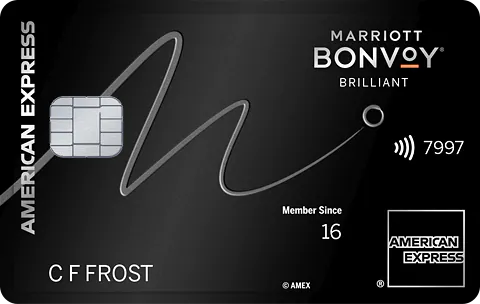
| Marriott Bonvoy Brilliant | $650 | $900 | +$250 |
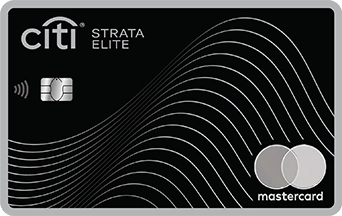
| Citi Strata Elite | $595 | $734 | +$139 |
| Bilt Palladium | $495 | $600 | +$105 |
| Amex Gold | $325 | $424 | +$99 |
| Chase Sapphire Preferred | $95 | $370 | +$275 |
| Capital One Venture X | $395 | $330 | −$65 |
Three things to notice:
The maximum is not the real number. The Sapphire Reserve's $4,464 includes $750 that only unlocks after $75,000 of spending in a calendar year and $1,050 in one-time 10th-anniversary offers that run only through 2026. Strip those out and the recurring credits come to $2,664, much of it tied to specific merchants (StubHub, Peloton, DoorDash, Lyft, Apple subscriptions). The Amex Platinum's $2,994 includes $755 a year in monthly credits that are lost if you skip a month. Your number will be lower.
Monthly credits are the hardest to use. On the Amex Platinum, four benefits reset every month. Miss three months of a $25 streaming credit and you've lost $75. Tracking them in the Benefits Tracker is how you get close to the maximum.
Simple cards can look worse than they are. The Venture X shows only $330 in credits: the $300 travel credit plus the Global Entry credit spread over four years. Its 10,000 anniversary miles are listed as a perk at $0, and its 2x earning on everything isn't counted. More on that below.
Worked example: is the Amex Platinum worth it?
Say you'd use these Platinum benefits:
| Benefit | Calculator default | What you'd really use |
|---|---|---|
| Hotel credit (twice a year) | $600 | $600 |
| Uber Cash (monthly) | $180 | $180 |
| Resy dining (quarterly) | $400 | $200 |
| Streaming (monthly) | $300 | $120 |
| Airline incidentals | $200 | $100 |
| CLEAR Plus | $209 | $209 |
| Everything else | $1,105 | $0 |
| Total | $2,994 | $1,409 |
Against the $895 fee, that's +$514 a year: Worth it.
Now say you rarely stay in hotels and untick the hotel credit. Your usable benefits drop to $809, which is 90% of the fee. The verdict becomes Marginal. Same card, different traveler, different answer.
Add a 175,000-point welcome offer at 1.99¢ per point ($3,483), and Year 1 is strongly positive either way. That's the classic premium card pattern: an easy first year, then a real decision at the first renewal.
Worked example: Venture X and its anniversary miles
The Venture X loads with $330 in credits against a $395 fee, which is 84% of the fee: Marginal, at −$65 a year.
But every year the card also deposits 10,000 bonus miles on your account anniversary. At the default 2.04¢ per mile, that's $204. The calculator lists them under Perks with no set value as "Annual 10k Miles". Enter 204 there and your value becomes $330 + $204 = $534, which is +$139 after the fee: Worth it.
The same works for any perk that repeats every year: put in what it's worth to you.
What the calculator leaves out
The calculator is built around fixed benefits. It deliberately ignores a few things you should weigh yourself:
- Points earned on spending. A card that earns 4x on your biggest category can be worth its fee on earnings alone. Use the Card Optimizer to compare earning against the cards you already have.
- Lounge access. Worth a lot if you fly often from airports with good lounges, and nothing if you don't. See which lounges a card opens in Lounges.
- Elite status and insurance. Hotel status and similar perks are listed under Perks with no set value at $0; add a value if they're worth money to you. Rental car coverage and trip protections aren't listed at all.
- The cost of the alternative. If cancelling means downgrading to a no-fee card that still earns your points, the bar for keeping the premium card is higher.
Keep or cancel: using the Year 2 number
When the renewal fee posts, use the calculator like this:
- Ignore the signup bonus. You already have it. Only Year 2 matters now.
- Be honest about last year. Set each credit to what you actually used, not what you planned to use. Your Benefits Tracker history makes this easy.
- Ask for a retention offer. Many issuers offer points or a statement credit to keep you. Enter it under Retention offer and see whether it changes the Year 2 verdict.
- If it's still Not worth it, downgrade before you cancel. A no-fee card from the same issuer keeps your credit line and account age.
Frequently asked questions
Is a credit card worth the annual fee?
It's worth it when the benefits you'll actually use, plus the value of your points, are greater than the fee. The Card Value Calculator compares your usable benefits against the fee and labels the result Worth it, Marginal or Not worth it.
How does the calculator decide Worth it, Marginal or Not worth it?
Worth it means your value is greater than the annual fee. Marginal means it's between 80% and 100% of the fee. Not worth it means it's below 80%. Cards with no annual fee are always Worth it.
Should I include the signup bonus?
Include it when deciding whether to apply, which is what the Year 1 number shows. Exclude it when deciding whether to keep a card at renewal, which is what the Year 2 number shows.
How are monthly and quarterly credits counted?
They're annualized automatically. A $25 monthly credit counts as $300 a year, and a $100 quarterly credit counts as $400. Lower the amount if you won't use every month or quarter.
What CPP does the calculator use?
Each card uses AwardHack's default value for its points currency, for example 2.00¢ for Chase Ultimate Rewards and 1.99¢ for Amex Membership Rewards, the same values as the Points Valuator. Change the Point value under Your numbers to use your own.
Is the Amex Platinum worth it?
It depends on which credits you use. The calculator loads $2,994 in credits against an $895 fee. If you'd use the hotel, Uber, CLEAR and some of the dining and streaming credits, you'll likely come out ahead. If you won't use the hotel credit, it can drop to Marginal.
Is the Chase Sapphire Reserve worth it?
It can be, but by less than the headline suggests. The calculator loads $4,464 in credits against a $795 fee, but that includes $750 that needs $75,000 of spending in a year and $1,050 in 10th-anniversary offers that end with 2026. The recurring credits come to $2,664, and much of that is tied to specific merchants, so untick the ones you wouldn't use and check the Year 2 number.
Can I share my result?
Yes. Share copies a link that opens the calculator with the same card and your numbers: unticked credits, changed amounts, bonus, point value and retention offer. On a phone it opens the share sheet instead.
Does the calculator count points I earn from spending?
No. It focuses on fixed benefits, the signup bonus and retention offers. To compare earning on your spending, use the Card Optimizer.
Do I need an account?
No. The Card Value Calculator is free and works without signing in.
The bottom line
The annual fee is a fixed cost and the credits are a maybe. Load the card, untick everything you won't use, cut the rest down to honest numbers, and look at the Year 2 verdict. If it says Worth it with conservative inputs, keep the card. If it only works when you assume you'll use every credit perfectly, it probably doesn't.